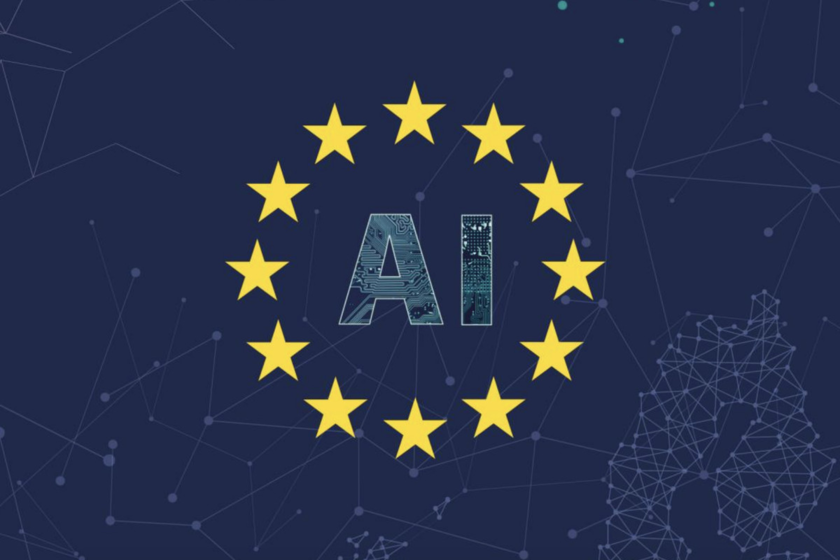
Artificial Intelligence (AI) has swiftly become one of the most influential forces reshaping Europe’s economic and industrial future. Across the continent, AI is transcending its roots in research labs and embedding itself into the everyday operations of businesses, governments, and institutions. From the manufacturing belts of Germany to the research hubs in France, the fintech centers in Ireland, and the public service innovations in the Nordic countries, AI is revolutionizing how industries operate, compete, and grow.
Europe’s economic landscape is witnessing a profound shift toward automation and data-driven decision-making. In manufacturing, AI-powered robotics and predictive maintenance systems are boosting operational efficiency and reducing downtime. Logistics companies are deploying intelligent routing algorithms to optimize supply chains, lowering transportation costs and carbon emissions simultaneously. The healthcare sector is incorporating machine learning for precision diagnostics, early disease detection, and personalized treatment plans—improving patient outcomes while reducing systemic strain. In education, adaptive learning platforms are offering customized learning experiences that address students’ unique needs, while in banking and finance, AI is combating fraud, enhancing customer service through chatbots, and refining investment strategies through predictive analytics.
The European Union (EU) has recognized that the digital economy, anchored in advanced AI capabilities, will be central to sustaining competitiveness in an increasingly interconnected world. Under the European Commission’s Digital Decade framework, ambitious targets have been set to develop robust digital infrastructures, boost innovation capacity, and ensure that businesses of all sizes can harness data and AI technologies effectively. The goal is not merely to digitize but to democratize access to AI-driven tools, enabling small and medium-sized enterprises (SMEs) to modernize and scale up. This is a crucial step toward narrowing the productivity gap between large corporations and smaller players—an essential element in creating inclusive growth across the EU single market.
Importantly, Europe’s approach to AI is being defined not only by the pursuit of economic competitiveness but also by a deep-rooted commitment to ethics and human-centered design. While the US and China race ahead with rapid deployment and massive scale, Europe aims to lead in trustworthy AI—technological systems developed with privacy protection, fairness, accountability, and transparency embedded from the outset. This distinctive stance stems from Europe’s regulatory culture and its desire to align digital progress with fundamental rights and democratic values.
Countries like Germany are integrating AI into their “Industrie 4.0” strategy to ensure the next generation of manufacturing is both efficient and sustainable. France’s AI strategy, initially outlined through the Villani Report, emphasizes research collaboration, open data, and public engagement. Meanwhile, Nordic nations are pioneering the use of AI for green transition policies—applying advanced analytics to energy grids to reduce waste and enhance renewable energy output. These examples reveal a Europe that is determined to harness AI not only for economic gain but as a tool for building a sustainable, socially responsible digital future.
As a result, AI is not merely optimizing industrial output; it is rewriting the rules of economic value creation itself. New business models are emerging—built around data ecosystems, platform economies, and real-time responsiveness—requiring policymakers and companies alike to rethink investment priorities, competition policies, and workforce training. The question now is not whether AI will redefine Europe’s economy, but how effectively the continent can channel this technology into long-term, inclusive prosperity while staying true to its social and ethical foundations.
Navigating Challenges and Building Resilience — Ensuring Ethical, Inclusive, and Sustainable Growth in Europe’s AI-Driven Economy
Despite its promise, Europe’s AI journey is not without significant challenges. The region must navigate a delicate balance between regulating AI for public good and promoting an environment conducive to technological innovation and competitiveness. The European Union AI Act, formally adopted after years of consultation and debate, stands as the world’s first comprehensive regulatory framework governing artificial intelligence. Its primary objective is to ensure that AI systems deployed in Europe are transparent, explainable, and aligned with human rights. It classifies AI applications based on risk—banning unacceptable uses such as social scoring and requiring stringent oversight for high-risk systems used in areas like healthcare, finance, or law enforcement.
While this regulation underscores Europe’s leadership in ethical governance, it also raises legitimate concerns among businesses regarding compliance costs, administrative complexity, and the pace of innovation. European startups and SMEs, in particular, worry that strict rules might hinder their ability to scale in global markets. Meanwhile, major tech competitors in regions with less rigid oversight could gain a speed advantage in commercialization. Finding the right balance between innovation freedom and ethical constraint will therefore be a defining challenge for Europe’s AI-driven economy in the next decade.
Another pressing issue is the labor market transformation triggered by AI automation. Certain routine jobs are being fundamentally restructured or made obsolete, while new roles are emerging that demand digital literacy, analytical thinking, and cross-disciplinary expertise. Europe’s workforce must be equipped to transition effectively through targeted reskilling and lifelong learning programs. Public-private partnerships, investment in STEM education, and initiatives such as the European Skills Agenda will be crucial to preparing citizens for this evolving employment landscape.
Equitable data access remains another bottleneck. The EU’s Data Act and Data Governance Act aim to ensure that valuable industrial and personal data can be shared securely and fairly across industries and borders. However, achieving data interoperability while maintaining privacy protection continues to be a complex balancing act. Similarly, safeguarding AI systems against cyber threats is critical: as industries become increasingly automated, vulnerabilities in AI could translate into systemic risks affecting energy networks, healthcare infrastructure, or financial systems.
Moreover, there is the risk of AI concentration—where technological power and data resources become centralized among a handful of dominant players. Such concentration can stifle innovation, limit competition, and exacerbate economic inequality. Europe’s response lies in supporting regional AI clusters, encouraging open-source collaborations, and investing in cloud and edge computing initiatives that distribute computing power more equitably across the continent.
The path forward requires coordinated ecosystem governance. Policy coherence across member states, research collaboration across universities and industries, and citizen inclusion in policy dialogues will determine how effectively Europe integrates AI into its socio-economic fabric. By coupling digital progress with ethical reflection, Europe has the opportunity to chart its own model of AI leadership—one that prizes sustainability, fairness, and accountability as much as it values innovation and growth.
Ultimately, Europe’s challenge is to turn its regulations into a competitive advantage—transforming ethical AI into a global benchmark of quality, trust, and reliability. If successful, the continent can demonstrate that technological progress need not come at the expense of human values or social cohesion. Instead, these can serve as guiding principles for a more resilient, inclusive, and sustainable economic future—one in which Artificial Intelligence is not merely a tool for efficiency, but a catalyst for shared prosperity across all of Europe’s diverse societies.