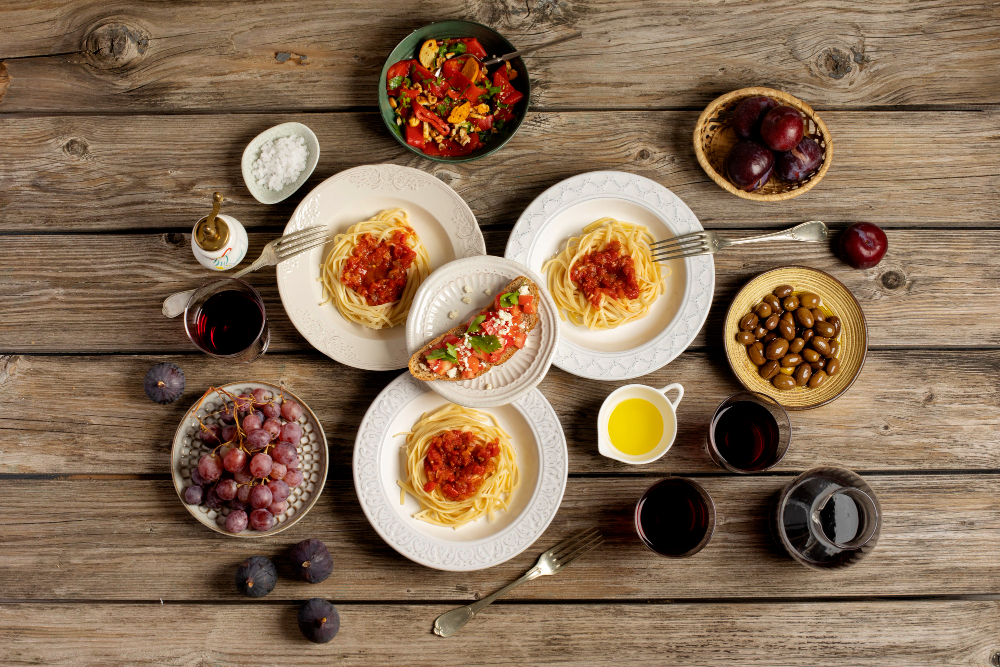
The story of European cuisine is, at its heart, the story of civilization itself. Long before the notion of “European identity” existed, the continent’s fertile lands and navigable rivers created microcosms of culinary development. Wheat, olives, and grapes—the ancient Mediterranean triad—gave birth to bread, oil, and wine, staples that still form the symbolic and practical foundation of European food culture. To the north and east, colder climates favored grains, dairy, and preserved meats, while fishing traditions sustained countless coastal communities. The diversity of geography and climate created distinct regional diets, but trade networks and migration patterns soon wove these threads into a larger fabric of shared influences and reciprocal learning.
The Roman Empire played an early unifying role, spreading agricultural techniques, irrigation systems, and culinary staples across the continent. Later, the fall of Rome fragmented Europe, but monastic communities quietly preserved the agricultural wisdom and recipes that would inform future generations. Medieval times saw the rise of feudal gastronomy, where food became both sustenance and a symbol of social hierarchy. Spices arriving from Asia—pepper, cinnamon, saffron—became indicators of wealth and power, while peasants relied on hearty porridges, legumes, and preserved vegetables that embodied resourcefulness and seasonal awareness. These humble practices, far from being forgotten, have inspired modern chefs who now celebrate “peasant food” as rustic authenticity.
The Renaissance transformed European cooking into an art form. Italian courts redefined presentation, while French chefs codified culinary refinement. The discovery of the New World in the 16th century revolutionized diets—potatoes, tomatoes, cocoa, and maize became fundamental elements that no one could now imagine European cuisine without. Each epoch layered something new onto what came before, illustrating how continuity and change coexist within tradition. Industrialization, centuries later, broadened access to ingredients but also triggered mass production, provoking a counter-movement that valorized craftsmanship and locality—a theme that resonates strongly today.
Religion, too, shaped European foodways. Catholic fasting, Jewish dietary laws, and Islamic influence in southern Europe cultivated distinctive methods of preparation and abstention that emphasized balance and respect for sacred time. Festivals and feasts tied to the Christian calendar made food a vehicle for spiritual expression as much as nourishment. The symbolism of breaking bread together transcended religious boundaries, uniting people around shared meals.
These cumulative experiences created what can be called the “European table”: a space where food is not merely consumed but contemplated. Every dish, from the Portuguese bacalhau to the Hungarian goulash, tells a story of adaptation and connection. The evolution of cuisine across centuries—through wars, plagues, migrations, and renaissances—reveals that what defines Europe’s gastronomy is not uniformity but conversation. It is a constant dialogue between the past and the present, between necessity and creativity, between honoring what came before and envisioning what comes next.
Today’s European cuisine exists at a fascinating crossroads. The reverence for traditional methods—slow fermentations, wood-fired baking, artisanal cheese-making—coexists with cutting-edge gastronomy that employs molecular science, zero-waste techniques, and precision fermentation. What connects these extremes is a shared desire for meaning: a sense that cooking reflects not only taste but values, community, and identity.
In the Nordic countries, chefs have redefined minimalism through an ethos of radical locality. The New Nordic movement, influenced by foraging and seasonal awareness, reintroduced the value of connecting with one’s immediate environment. Elsewhere, Mediterranean nations have reemphasized the virtues of simplicity and freshness—the olive oils of Spain and Greece, the seafood of Italy’s southern coast, and the vibrant produce of Provence all representing a return to naturally healthy, balanced eating. Central and Eastern Europe, long undervalued in fine dining discourses, is now celebrated for its resilience and inventiveness: fermentation, pickling, and wild herbs are rediscovered not as relics of scarcity but as tools of flavor and sustainability.
Technology also plays a vital role in the new European kitchen. Precision farming, digital traceability, and climate-conscious menu planning allow chefs and producers to measure their environmental impact. Urban gardens and vertical farms supply restaurants directly. Meanwhile, storytelling has emerged as a defining element of modern dining—public consciousness around origin, waste, and animal welfare is driving restaurants to be transparent about their choices. Fine dining has evolved beyond elitism into an exploration of ethics and empathy.
Crucially, the continent’s historical openness to exchange continues to guide its evolution. Migration and globalization have introduced Middle Eastern spices to Scandinavian kitchens and Asian fermentation techniques to French bistros. Rather than erasing tradition, these encounters enrich it. Dishes like British curries, Portuguese-African stews, or Balkan fusion plates illustrate the enduring adaptability that has always defined European food.
Perhaps the most striking development is the shift from indulgence to intention. Today’s diners seek not just pleasure but purpose in their meals. The sustainability movement has rekindled respect for seasonality, local sourcing, and reduced waste—values that, paradoxically, echo the frugality of pre-industrial Europe. Community-supported agriculture, slow food initiatives, and educational projects across the continent highlight that culinary progress need not mean disconnection from roots.
In essence, contemporary European cuisine is not a reinvention but a renewal—a modern reiteration of the same spirit that once inspired monastic brewers, royal pastry chefs, and village bakers alike. It continues to balance continuity with curiosity, preserving what deserves reverence while experimenting without fear. This harmony between heritage and innovation, between simplicity and sophistication, ensures that European cuisine remains not just a reflection of its past but an evolving narrative of its present and future.
European gastronomy, then, is more than a collection of recipes—it is a living dialogue between memory and imagination. Every generation adds its own voice to the conversation, proving that the essence of the continent’s food lies not in static authenticity, but in its ability to grow, to absorb, and to inspire. From the humble hearth to the avant-garde kitchen, Europe’s culinary story remains a testament to how culture, taste, and humanity intertwine to create something continually new, yet timelessly rooted.