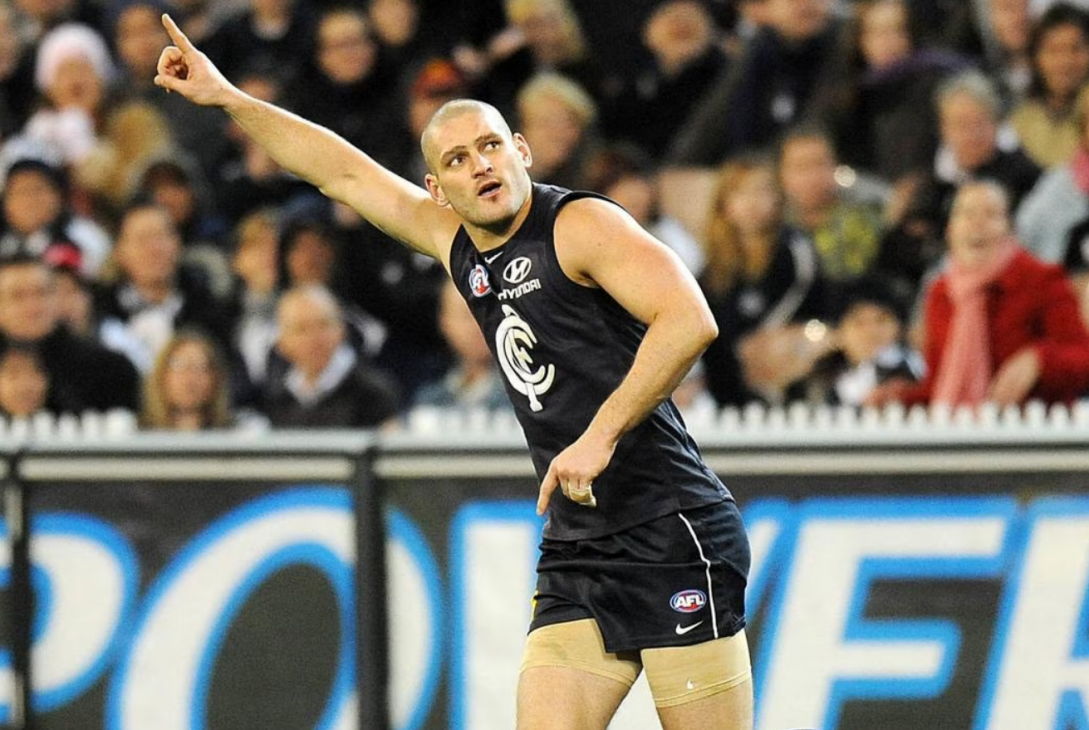
Brendan Fevola’s career is one of the most fascinating stories in modern Australian sports culture because it combines elite athletic success, celebrity excess, public controversy, personal collapse, and eventual reinvention. At different points in his life, Fevola has been viewed as a sporting hero, tabloid sensation, cautionary tale, and media entertainer. Few Australian athletes have experienced such dramatic shifts in public perception.
At his peak, Fevola was one of the biggest stars in the Australian Football League. Playing primarily for Carlton Football Club, he became famous for his powerful goal-kicking ability, charismatic personality, and emotionally intense playing style. Fans loved watching him because he played with visible passion and unpredictability. He could dominate matches physically while simultaneously creating chaos both on and off the field.
What separated Fevola from many athletes was that his personality felt larger than sport itself. He was loud, impulsive, humorous, and highly emotional. In an era when professional athletes increasingly became media-trained and cautious, Fevola often seemed unable — or unwilling — to filter himself. That unpredictability made him enormously entertaining for audiences and extremely difficult for clubs and sponsors to manage.
Throughout the 2000s, Fevola became one of the AFL’s defining personalities. He scored goals spectacularly, celebrated dramatically, and regularly attracted headlines beyond football. Sports media covered not only his performances but also his nightlife, relationships, controversies, and behavior outside competition.
This constant attention helped transform Fevola into a celebrity figure rather than simply an athlete. Australian tabloids followed him intensely because he generated stories naturally. Whether appearing in television interviews, participating in entertainment programs, or making controversial public appearances, he remained highly visible.
However, the same traits that made Fevola entertaining also created serious problems. His career became increasingly associated with alcohol-related incidents, disciplinary issues, and struggles with maintaining professional stability. Clubs attempted to manage his behavior repeatedly, but controversy continued following him.
Over time, public discussion around Fevola shifted from amusement to concern. Behind the humor and media spectacle, deeper personal struggles became more visible. Mental health issues, emotional instability, and addiction challenges increasingly shaped both his career and personal life.
One reason Fevola’s story resonates strongly in Australia is because many people watched his decline happen publicly. Unlike athletes whose struggles remain hidden, Fevola experienced much of his personal collapse in front of cameras and national media. Public fascination with his behavior often blurred into exploitation.
Eventually, his football career deteriorated despite his enormous talent. Many observers believed Fevola could have achieved even greater sporting success if his personal life had remained stable. That unrealized potential became part of his public mythology.
Yet what makes Brendan Fevola especially interesting today is not simply his sporting career, but his reinvention afterward. In recent years, he rebuilt much of his public image through radio, television, and entertainment media. Instead of hiding his past struggles, he began discussing them openly.
This honesty changed how many Australians viewed him. Rather than being remembered only as a controversial footballer, Fevola increasingly became seen as someone who survived fame, mental health struggles, and addiction while remaining emotionally open about his experiences.
Modern audiences often respond positively to vulnerability, particularly from male public figures who openly discuss emotional hardship. Fevola’s willingness to admit mistakes and discuss personal challenges made him feel more human and relatable than many polished celebrities.
His media career after football also revealed skills that extended beyond sport. Fevola proved naturally entertaining in radio environments because of his spontaneity, storytelling ability, and self-deprecating humor. He developed a reputation for being funny without seeming artificial or overly scripted.
Importantly, Fevola’s public evolution mirrors broader changes in how society discusses athlete mental health. In earlier decades, emotional instability among athletes was often dismissed as weakness or personal failure. Today, conversations around pressure, addiction, depression, and identity after sport are far more open. Fevola became part of that cultural shift.
Even people who never followed Australian football often recognize his name because his story extends beyond sports itself. It touches on celebrity culture, masculinity, public shame, redemption, and the psychological cost of constant visibility.
Brendan Fevola’s legacy remains complicated. Some remember the brilliant footballer capable of dominating games almost effortlessly. Others remember controversy and chaos. Increasingly, however, many Australians view him as something more nuanced: a flawed but deeply human public figure who managed to rebuild himself after years of public struggle.
That complexity is exactly why his story continues attracting attention long after his playing career ended.